BLACK EAGLES FLY FOREVER - BEING BESIKTAS FROM BIRTH
In the heart of Istanbul, a group formed from the embers of political instability continues to burn bright…

Words:
Tuğçe ÖzbiçerImages:
Walking down Ihlamurdere Street, in one of Istanbul’s most vibrant districts, I’m surrounded by a flock of people covered in black and white. These are noisy people. Their loud chants merge with the cacophony of the streets: car honks, cries of street sellers pitching their latest products, pedestrians yelling at each other to get over the noise.
Then the song starts. A song I know well. I feel at one with them as I sing at the top of my voice:
”…Beşiktaş I promise you / my love for you will never end / even when I’m in my grave!”
No place like home, I think to myself.
I was born here: Beşiktaş. A vibrant neighbourhood of Istanbul’s European coastal line that overlooks Asia, it’s here where cultures merge. Open-till-late cafes, fish markets, bookshop passages, and cool clothing stores all meet each other in an area that has always been a crucial trade district. Its alleyways will take you to captivating places that show there has always been so much life here. Almost every day after work, my mum walked with me to the centre to visit old churches, silver shops famously owned by Armenian artisans, and that busy fish market. I would be holding her hand tight through the chaotic streets.
Those walks through these streets continued as I got older. Becoming a teenager in such a diverse environment was as exciting as anything. I had friends from all backgrounds: Kurdish, Jewish, Rum people, which is a term that refers to the Orthodox citizens of the Ottoman Empire and Turkey. We’d take after-school courses, go for secret first beers, explore the endless bars and have lots of chats about love, politics, and life. As we passed by the big eagle statue in the centre, we’d make fun of the couples who were fighting right after they’d met up in the most public space one can imagine. It’s funny how I broke up with my first boyfriend in the same spot when I was 19.
And, taking its name from the district and matching its atmosphere perfectly, is a football team that welcomes everyone.
Beşiktaş. You know who we are.
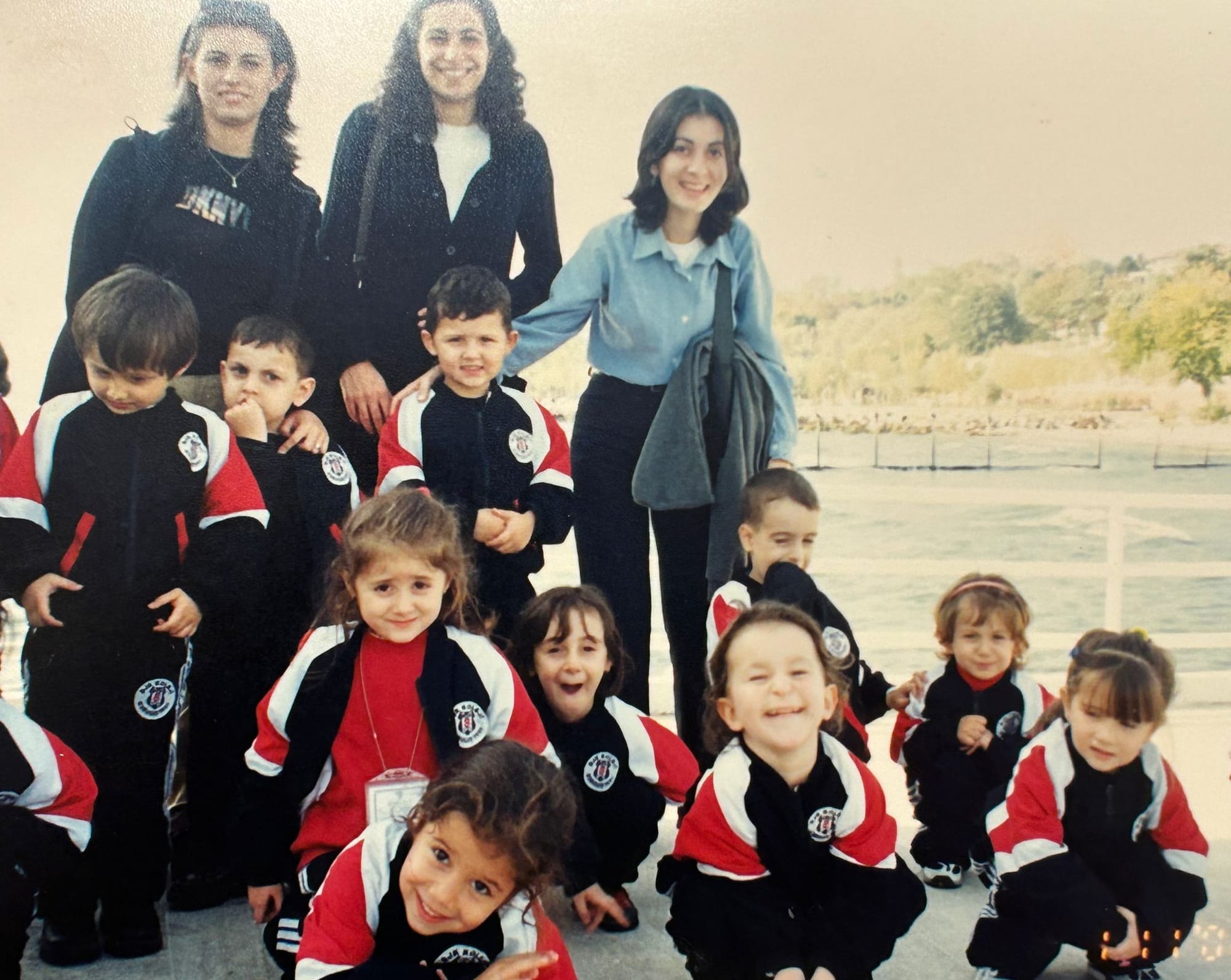
“One cannot become a Beşiktaş supporter,” Gülfer Özbiçer tells me, quickly moving her freshly cut hair up after talking about how hot it has been this summer like all Istanbullers do every single year. “Either you’re a Beşiktaş fan from birth, or you’re not,” she continues. You hear this type of classy and passionate elaboration of being a Beşiktaşli from most of the team’s supporters. Gülfer is one of the biggest Beşiktaşli I know. And I know that because she is my mother.
From a big Balkan family of five with many, many relatives, my mother’s parents immigrated to Istanbul from Yugoslavia and were placed in a Balkan neighbourhood of the city. According to my mother, my grandfather was a true proletariat who cared about values such as equality, the right to education and accessibility. He did all sorts of jobs, which led him to socialise with his fellow members of the welcoming and social-minded working class in the area, and one day got invited to a Beşiktaş game, which changed his life forever. As someone who was born and lived all his life under socialism in Yugoslavia, he finally started to feel at home in a community of Beşiktaş fans. Attending more and more games, he planted the seeds of being a true Beşiktaşlı in our family.
“It meant the world to me when my dad started to take me to Beşiktaş games with him!” my mum tells me, my heart full of joy as we drink Turkish coffee on the balcony of my childhood home. “We would first have a quick classic Beşiktaş snack called köfte ekmek, which is grilled meatballs in bread with some salad. It was very affordable, and we would buy them from the same guy every time from his street wagon. Afterwards, we would start the walk to Inönü Stadium, accompanied by thousands of passionate, almost mad fans.
“The atmosphere was something else, especially to a seven-year-old child! Once, my dad’s mates surprised me with an actual licensed Beşiktaş shirt, which was something my dad knew I’d die for, but he, unfortunately, couldn't afford.”
I’ve seen the only photos she has from her childhood in black and white. She was a skinny little girl, always smiling, with wavy blonde hair and a cut-by-her-mum fringe. Those were the most precious moments she shared with her father, who passed away when she was only 11 years old. And most beautifully, I can imagine how she felt as a little kid… since mum also took me to Beşiktaş games when I was little and gave me the chance to have joyful memories with her.
“Chanting along with the fans and experiencing the politically aware environment made me a person who always stood up against inequality,” says Mum. Historically known as ‘halk takımı’, meaning ‘people’s team’, the community of Beşiktaş fans, as much as the sports club itself, always took pride in their philosophy of caring, following ethical values, and fair play. “Beşiktaş means courage, honesty, comradery, solidarity."
"Beşiktaş means life itself!’’
She says with her eyes gleaming, fanning herself with her blue blouse. These are the core values that saw Beşiktaş fans recently break the Guinness Book of Records for the loudest noise from a football stadium: people believing they can have an impact by uniting and standing by one another.
Talking of which, my mum married my dad, a Galatasaray fan, and at six years old, I was promptly sent to the private school of Beşiktaş Gymnastics Club.
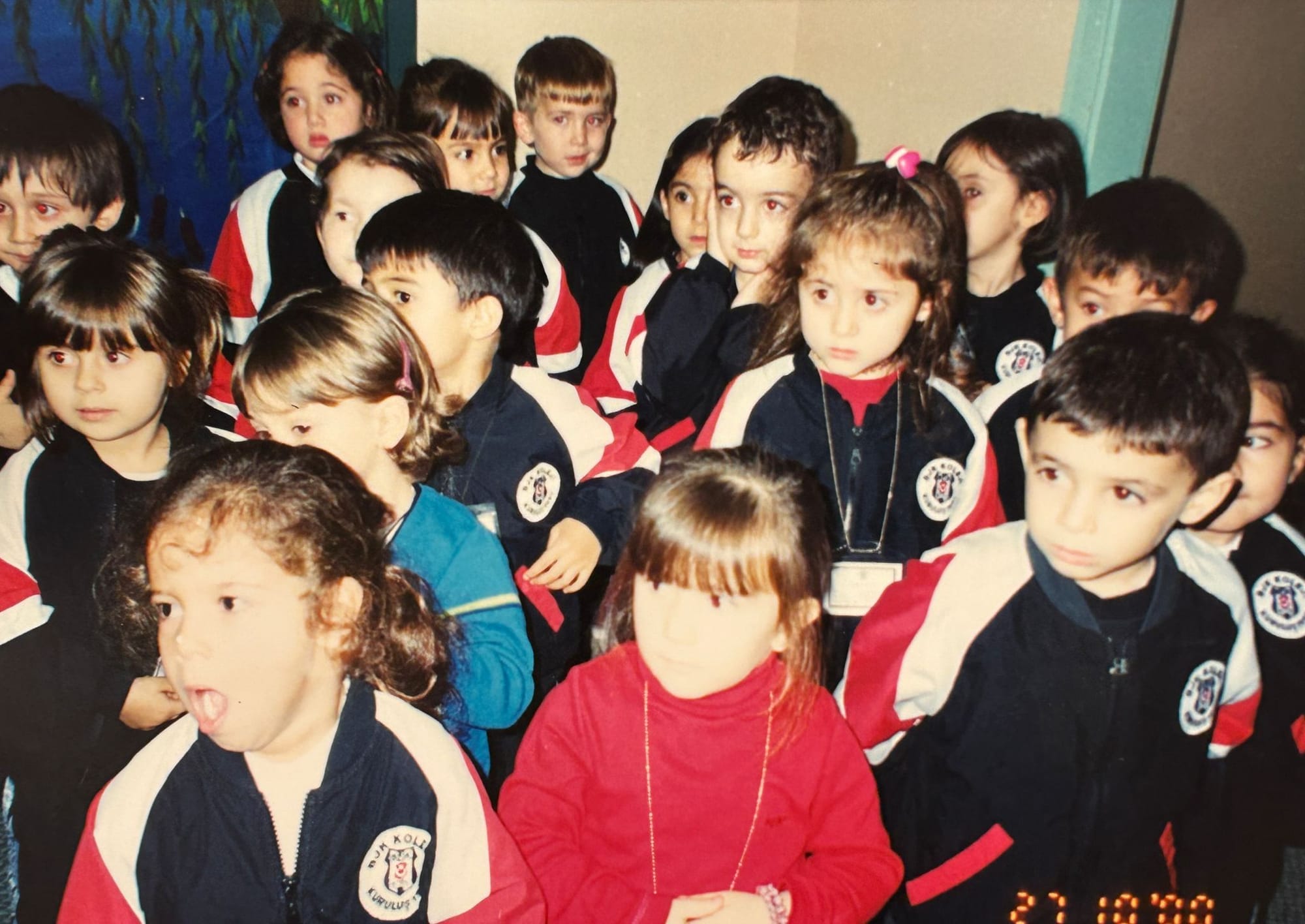
“I couldn’t risk him influencing you!” my mother says, now laughing.
I know that I was happy every morning singing, ”We are the baby eagles / black and white are our veins.”
When the Beşiktaş Ultras group formed in 1982, it was in the shadows of years of disrupted political and social life. Following a coup d’état in 1980, Turkey was under a very strict military rule, and many people were influenced by the Parisien leftist student protests that started in 1968 to react against this. Universities and civil organisations were at the centre of the riots in the country, especially in the 1970s, and political division became so tense due to the right-left paradigm that street violence became a regular occurrence. The military junta in ‘82 made things worse, with at least 50 people executed and around half a million detained. Many were tortured and murdered by the state in prisons. The Ultras became a getaway for working-class people who were living under an authoritarian regime.
They took the name çArşı from the neighbourhood at the centre of Beşiktaş and the word that was in their mouth before every game: Are we meeting in Çarşı? I’ll see you at 8pm at Çarşı. Çarşı, meaning marketplace in Turkish, is where you’ll find that big eagle statue, and it became their meeting point as much as it did for couples to break up. It’s these public spaces where life happens most. The capital ‘A’ is for anarchism, and one of the group’s mottos is Çarşı, her şeye karşı!—Çarşı is against everything!
The group are not just about football and have been at the forefront of some crucial moments in recent Turkish years. The group were a centralising force in the Gezi Park protests against Recep Tayyip Erdoğan’s authoritarian government in 2013. Sit-in protesters were brutally turned on by police, and with çArşı well acquainted with the excessive police force and government’s oppression techniques, they were the first ultras in Istanbul to support the protests, which eventually spread all around Turkey.
"On the third day, çArşı members hotwired a bulldozer that had been left at the construction site outside Beşiktaş's Inönü Stadium and used it to push back police water cannon trucks."
In a country where Armenian genocide is not recognised, they hold up banners saying ‘We are all Armenian’, and when Ozgecan Aslan, a young female student, was brutally murdered in 2015, the group chanted ‘She Will Never Be Forgotten.’
Even though the group has never followed any sort of hierarchy, they’re highly organised. Back in November 2011, earthquakes hit the majority Kurdish city of Van in eastern Turkey. Erdoğan’s government was criticised due to lack of relief efforts, and on top of over 600 people losing their lives, survivors were left outside in freezing conditions. çArşı took up the cause by holding banners during the Beşiktaş-Galatasaray game in Inönü Stadium saying ‘’I’m sending you the sun, hold on tight’’ and ‘’Van, you won’t get cold, we’ll warm you up.’’ Furthermore, on the 65th minute of the match, Van’s postal code, the whole stadium was topless: all jackets, jumpers and scarves were thrown to the football field to be delivered to the victims of the earthquake. Not surprisingly, Beşiktaş Football Club was fined after showing solidarity.
You can trace recent Turkish history through the actions of çArşı.
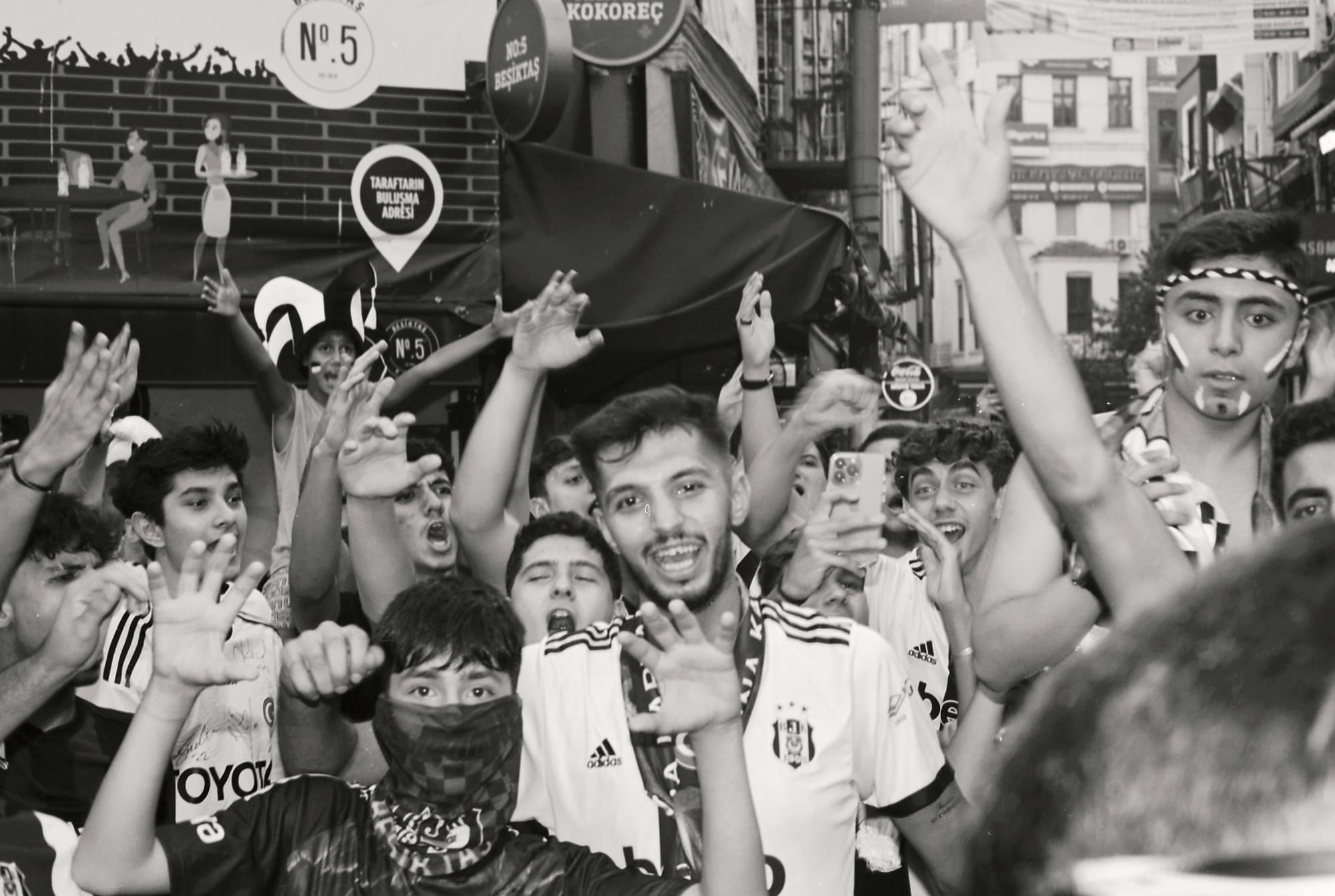
“He wears a Beşiktaş shirt 365 days of the year, and he is one of the congress members of the club!” my cousin Melike told me about Meriç, the man I’m meeting on a sunny Sunday on a rooftop in Beşiktaş overlooking the Bosphorus. Meriç is tall, very masculine, but with a smiley face that exposes his young age. He wears a black fitted T-shirt with a çArşı logo in the middle and a necklace and tracksuit bottoms, both with a Beşiktaş crest. His phone rings constantly with friends trying to get tickets for the match this evening.
Born Beşiktaşlı, like my mother, Meriç’s first introduction to Beşiktaş was through his father, and he went to the stadium for the first time aged five. Meriç is from Izmir, a seven-hour coach journey away, and when he turned ten, his dad told him ‘he was something else’, and that was that: he started heading to the games on his own, seven-hour coach journeys, meeting at çarşı, everything.
“I’m just trying to find half-priced tickets for people who can’t afford them,” he tells me as he laments the increases in price of everything. After a few phone calls, Meriç finds a few friends with season tickets and a ‘Passolig’ card who can’t make it to the game tonight. Despite the fact that it has been implemented for almost ten years by now, it still terrifies me that it’s not possible to spontaneously purchase a ticket and enter a football stadium in Turkey. Since 2014, everyone needs this ‘Passolig’, which is a modified pre-paid credit/debit card that contains personal information such as full name, passport number, and address. It is illegal to use someone else’s Passolig, and it's not a coincidence that this enforcement has been brought up by the Turkish authorities right after the anti-government protests at Gezi Park.
“During the Gezi Park trials, about 30–40 members of çArşı, including the founders, faced charges of ‘plotting to overthrow the government’,” Meric tells me when talking about the impact of political oppression on the Beşiktaş tribunes. çArşı were also accused of being part of an ‘armed group’ and ‘possessing unlicensed weapons’. Cem Yakışkan, one of the founders of the group, was among those accused of trying to attempt a coup, and when asked by the judge if ‘he belonged to an organisation that was planning a coup against the government’ during his trial in 2014, replied, “If we (speaking for çArşı) had any sort of power to make a coup happen, we would have used it to make Beşiktaş champions!” Accusations against Yakışkan were dropped afterwards.
With a ticket secured through one of Meriç’s phone calls and someone else’s Passolig in my pocket, like so many, we climbed up the hill towards Şairler Parkı—poet’s park—one of the main meet-up areas and meet Meriç’s friends, all dressed in black and white. And then Meriç starts singing:
”On a rainy day, I saw you / you were wearing the striped uniforms / it was love at the first sight / I found the meaning of life / it has always been black and white.”
Here in the park, it’s busy, joyful; kids are on swings, families eat street food, some lay down, and some drink beer. We all sing along.
Walking down Ağaçlı Yol, a road known as the Road with Trees that heads from Beşiktaş to the stadium, I become fully nostalgic and cannot stop thinking about the times I walked this road on my uncle’s shoulders. My mother’s oldest brother, Uncle Şeref, has been one of the strongest impressions of a good Beşiktaşlı in my life. Before any game would start, he would bring all his Beşiktaş kits to the living room and put one on me and one on each of my cousins.
"The kits looked like dresses on our tiny bodies."
My other uncle and my father looked upset as they supported Galatasaray; in fact, they’d even offer us money to support Galatasaray just this once. We’d call for Uncle Şeref, screaming, “Help! They offered us money to become Gala,” and he’d tell them off and say to us, “See, this is what Galatasaray is all about. They think everything has a price tag in life!”
The redeveloped Beşiktaş Stadium, or Vodafone Park, opened in 2016 with a capacity of 42,590, but many fans still call it Inönü Stadium: the name of the sanctuary for all Beşiktaşlı between 1947 and 2013. Inönü Stadium encapsulated my joyful early memories: watching games on my uncle's shoulders, the excitement I felt while my mother ignited flares, cheering for our darling Beşiktaş with the guidance of our iconic amigos’ directions, all while expanding my knowledge of foul language. It was all about persistent love and unity. Today, I’ve been searched by security three times and even had my lighter taken from me. So I ask a guy for one and look around.
Now, I’m sitting in a row placed in the iconic kapalı tribune—the upper bit of the stadium—which has been filled with the maddest fans all those years. The moment the game kicks off, the whole tribune stands up to never be seated again until the final whistle. The atmosphere is so consistent throughout the game; the fans cheer all the time, non-stop. Yet, when Beşiktaş scores, they play my favourite song, and the whole stadium erupts:
”If you ever lose hope, look up to the sky,
The sun will rise after the darkness.
Children will sing songs that day,
Tomorrow will be better than today.
If our struggles are night, you are the morning,
If pain is winter, you are the spring.
If we love life, it's because of you,
Beşiktaş is life, and life is Beşiktaş.”
All of the chants that are written for Beşiktaş are deeply romantic. If you exchange ‘Beşiktaş’ with your lover’s name, they’ll touch you and describe your feelings perfectly. I spend the rest of the game in a trance, thinking about how much I miss my home.
Amidst the mouthwatering smells of kebab and smoke wafting from the barbecue, I’m finally meeting my childhood hero in his grill restaurant in Gayrettepe. It’s called Alen-i, which means ‘as it is’ in Turkish.
Alen Markaryan is the Beşiktaş’ tribune’s legendary Armenian amigo—the person who directs the chants and dedicates their life to the team. In a country where the Armenian genocide is still officially denied and socially a big taboo, Markaryan managed to be one of the most respected faces of Turkey’s tribunes. As the former spokesperson for çArşı, Alen’s love for Beşiktaş and his siding with the oppressed is unquestionable. Back at the old stadium, no game would start before Alen was called out to go in the middle of the football field and ‘tell the eagles to cheer’. With his ‘hush’, rows of the stadium would plunge into silence until he waved his arms three times, and fans would explode with claps ‘1-2-3, Beşiktaş!’ In pursuit of the meaning of true Beşiktaşlılık, I’m very curious about his story of being a Beşiktaş fan.
“We were living in a very small flat, and my father, who was a Beşiktaş fan, always had his fellow Beşiktaşli mates around. Merging with other kids on the streets with working-class backgrounds, we all supported Beşiktaş,” Alen explains. The most common reason for people becoming a Beşiktaşlı is the inclusivity, and Alen Markaryan belongs to the first generation of çArşı. It was their energy and mobilisation ability that brought together hundreds of thousands of people from all sorts of ethnic and social backgrounds. Around 1978, Markaryan and his mates started to meet up before Beşiktaş games and broke into the stadium. ‘’Once you were there, you always wanted to be there!’’ he says with excitement in his eyes. “Between 1978 and 2012, except for the necessary military service, I’ve been to every single Beşiktaş game. I wanted to chant along, learn new songs, go to school and spread them out!”
It was people like Alen who created something entirely new for Turkish football and founded the term tribüncülük, meaning tribune culture in Turkish. When I ask him more about what it really means, Alen explains that Tribüncülük means to follow Beşiktaş 24/7. ‘’Not only the football matches but also following volleyball, handball, and amateur games, too. It’s about living in the tribunes, when not physically, then in your mind. Being creative and always thinking: How can I be useful for my beloved Beşiktaş?’’
Alen’s çArşı inspired not only people but also Fenerbahçe and Galatasaray to form their own groups.
“Poems you write to be chanted reflect your perspective on life,” Alen explains as meze are being taken to tables by kind waiters. “Through them, you raise your voice and spread the messages you want to give to the world. Our stadium looked like a bride before any game! We focus on activating ourselves and the tribunes rather than Beşiktaş football club. Tribunes were our life, and Beşiktaş was in the middle of life itself.”
For a moment, his mind wanders into the past and how Beşiktaş tribunes used to be. Football becoming a market, government’s control on sports games, economic oppression and club management have undeniable effects on tribune culture in Turkey. ‘’The system turned fans that go to games into customers.”
After 40 years of being active in Beşiktaş tribunes, Alen quit being an amigo in 2013, after the Gezi Park Protests and how they changed the Beşiktaş tribunes forever.
“Fellows from çArşı criticised me for saying we shouldn’t have been at the protests back then, now see my point. Being a Beşiktaşlı is, above all, protecting our crest. Sports can’t be politicised that much, especially here. Standing shoulder to shoulder, united by the love for Beşiktaş, not political or ethnical motivations—that’s how we formed our tribunes,’’ Alen still stands behind his words.
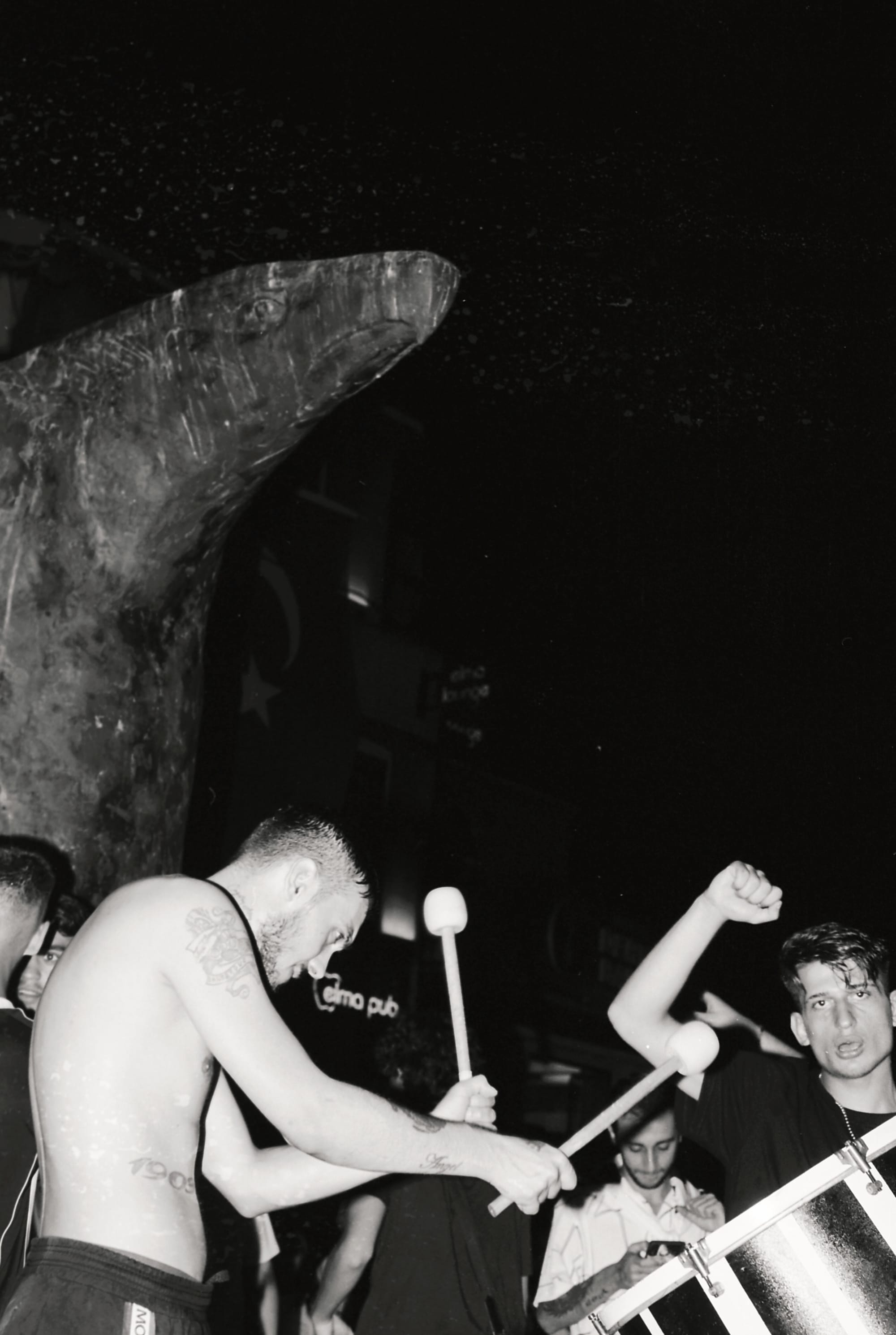
After all, what Alen really means is çArşı must raise the voice of the oppressed and continue spreading political messages, yet must find a way to not to jeopardise Beşiktaş. Looking back to the times when çArşı was founded, it was right after the 1980 d’état in Turkey. ‘’Our tribunes were formed under a military junta. When we were going to a game, if there were two brothers in a household, we told only one to come! To make çArşı one of the world’s respected ultras in the world, we paid the price—not only with physical injuries but people also lost their jobs, their families,’’ Alen tells me.
The whole time I’m with him, he keeps insisting I eat some food in his restaurant. In Alen-i Grill Restaurant, you can find the most delicious kebabs from this part of the world, prepared being loyal to the traditional recipes. Whether you order a chicken shish or an Adana kebab, everything is cooked in front of you with the best quality of meat. Alen is fatherly, physically strong, and the very masculine figure that I remember him from Beşiktaş’ Inönü Stadium’s front rows.
It’s funny how he reminds me of Uncle Şeref and how the friend of my cousins, Meriç, reminds me of myself in some ways. I think it has something to do with being as it is, as Alen’s restaurant is called. Learning from everything that life throws at you and always trying your best to be generous and honest, regardless of the cost. It has something to do with always trying your absolute best and never accepting excuses. My heart has never been so broken and so full at the same time knowing I’ve been forced to leave this all behind, due to the political state of Turkey, yet I truly know that I never will. The source of this sense of familiarity has a connection with former player and honorary president Süleyman Seba's famous saying, “You cannot be a good Beşiktaş fan without being a good person.”
From Istanbul to London, my soul is seeking for those who are brave enough to live this life fully, passionately, bravely and yet kindly. Like a true Beşiktaşlı.